
Answers in surprising places
The discovery of penicillin in 1928 by Alexander Fleming was a surprising accident. Dr. Fleming was studying bacteria and left a few Petri dishes in his lab overnight to let the bacteria grow for the next day’s studies. He left them uncovered near an open window, probably without thinking.
The next morning there were areas in the Petri dishes with dead bacteria. It took him weeks to figure out hath it was the result of fungus spores that had been carried through the window by a gentle breeze, only to land on his Petri dishes. Surreptitiously, they had killed the bacteria.
Who knew an open window could facilitate the greatest medical advance of the 20th century?
In the 1960s, chemist Spencer Silver was working for 3M to develop an adhesive stronger than any known at that time. Unfortunately, he produced a pathetically weak adhesive leaving his supervisors uninterested. A colleague saw the possibilities, and the two worked for almost a decade before convincing 3M management that this weak adhesive would be useful. And the commercialization of Post-it notes proved them correct.
Who would anticipate this success from such a failure?
A Personal History
In 1992, I was playing in a friend’s yard with our 2-year-olds. I did not see a divot in the grass that caught my foot as I ran across the yard. I knew immediately this was not just a sprained ankle. I spent a week in the hospital and went home with my ankle rebuilt with screws and a plate. I was on crutches and not allowed to bear weight for almost 6 months. Rehab was hard.
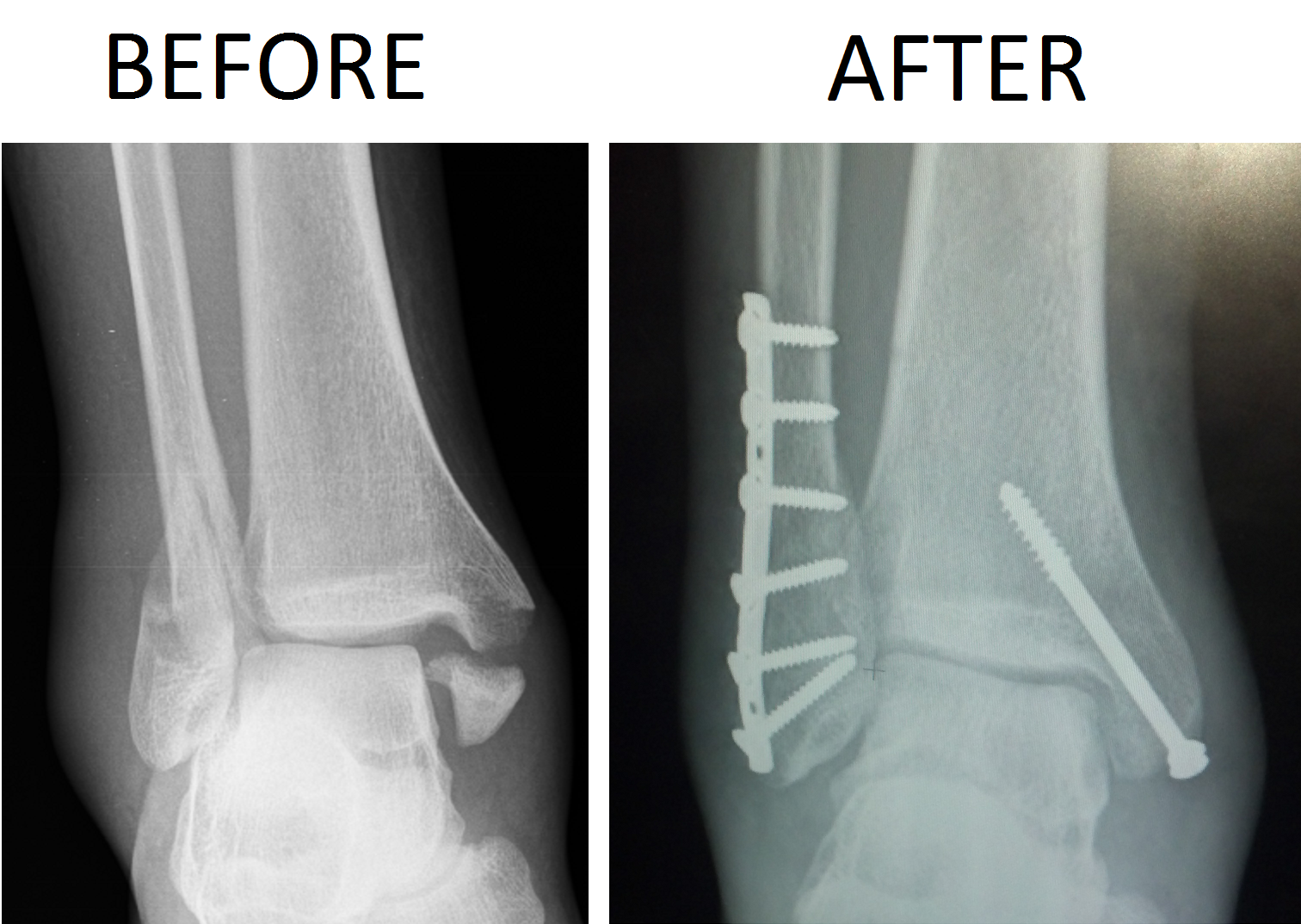
Three surgeries and 30 years later I was in constant pain.
I saw two specialists. Both recommended that I undergo fusion of my ankle, which meant I would not be able to bend or move my ankle at all; it would be permanently fixed on one position. I did not feel very optimistic but started a rehab program in advance of the anticipated surgery.
One day, my physical therapist suggested casually that I might find it less painful to exercise if I wore an ankle brace. I purchased one for $32. I started to wear it during exercise. It helped. I started to wear it while walking. It helped. Wearing it, I started to walk and jog (very slowly) on a treadmill. It helped.
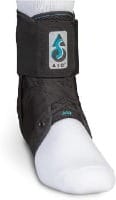
I wear the brace pretty much every day. Occasionally I still have pain. But hardly at all. No fusion. No surgery. Basically, problem solved (at least so far).
The Lessons
Out of nowhere, a casual suggestion relieved my pain and made me more active. I was expecting my surgeons to offer the optimal solution. I certainly did not expect to hear the solution while working to improve my balance at a physical therapy appointment.
We need to pay attention to all ideas. Even when they seem so simple.
In cases where there are risks, testing something new on your own is not a great idea. That a situation requires evaluating the data and digging into the science. When I advocate for a clinical trial of RB-190, I’m taking a deliberate and thorough approach.
On a simplistic level, my approach has two steps. First, I make myself open minded to as many possibilities as I see or am shown, remembering that the experts do not always have the answers. Second, when there is potential for risk, I use the science and scientific methods to evaluate what is the right next step.
This is how I ended up without surgery and without pain. The next step is to move RB-190 into clinical trials so we can learn if my optimism is warranted as we continue to focus on conquering Parkinson’s.
Share This
|
Sign up at: ParkinsonsDisease.blog |
About Jonathan Sackner-Bernstein, MD
Dr. Sackner-Bernstein shares his pursuit of conquering Parkinson's, using expertise developed as Columbia University faculty, FDA senior official, DARPA insider and witness to the toll of PD.
Dr. S-B’s Linkedin page
RightBrainBio, Inc. was incorporated in 2022 to develop tranformative therapies for people with Parkinson's.