
A Breakthrough?
SNT-4728 may be a breakthrough. And its data supports development of RB-190.
At the International Congress of Parkinson's Disease and Movement Disorders this month in Seoul, Professor Simon Lewis presented results of a Phase II trial with remarkable results.
The study evaluated the impact of SNT-4728 in people with REM sleep Behavior Disorder (RBD), which is a disorder of sleep that could be a precursor of Parkinson’s disease (as well as multiple system atrophy and Lewy body dementia). SNT-4728 is a pill that appears capable of reducing inflammation in the brain.
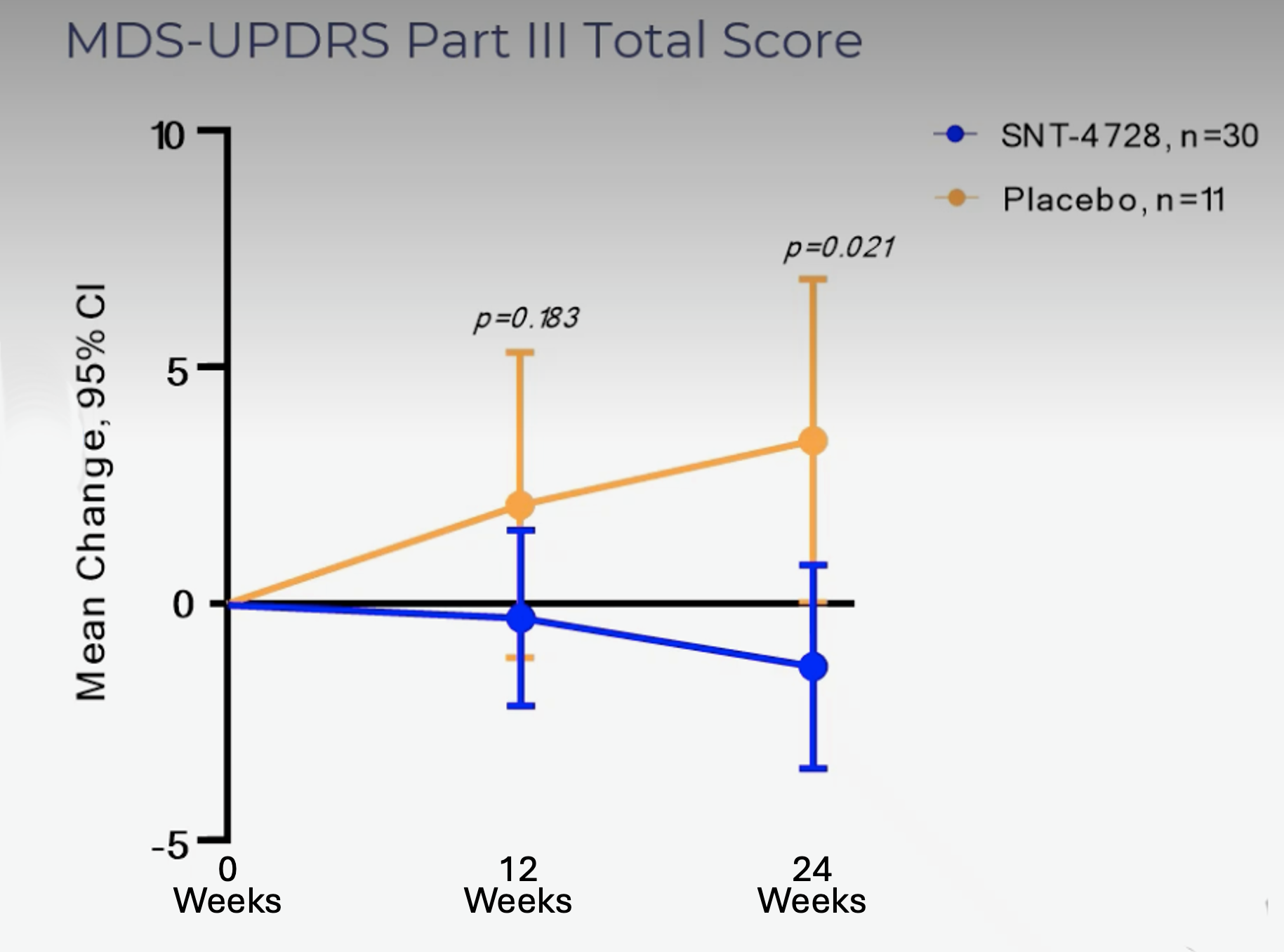
Of the 41 participants, 30 received the drug and 11 the placebo. After 12 weeks of treatment, the scores on MDS-UPDRS Part III improved and brain imaging using PET scans showed that the degree of inflammation it the putamen was reduced with therapy. Those findings are promising.
What came next is what makes this drug more exciting. The participants were studied again 12 weeks later – 12 weeks on no study medicine. The participants who received the drug for the first 12 weeks were found to get progressively better over the next 12 weeks.
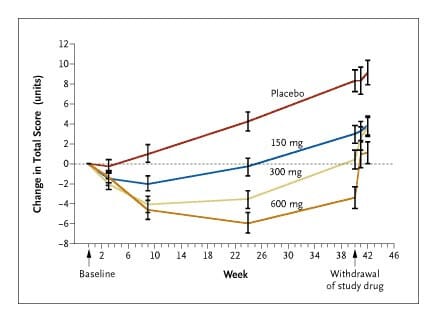
This feature of the clinical trial design is called a washout. And for comparison, consider what was reported after 2-week washout of levodopa therapy in the landmark ELLDOPA trial. Participants worsened within 2 weeks of washout of levodopa.
If a drug (or device or lifestyle change) continues to produce benefit even after it is withdrawn means that the drug changed the biology – changed the disease. We’ve seen that in other diseases with other therapies, but neve in Parkinson’s.
As Professor Lewis stresses when presenting the data, these are preliminary results. And scientists know that findings need to be shown to be reproducible, which in this case would be best shown in a Phase III trial. And we need to be cautious. Remember exenatide? It appeared to work in Phase II (though not with this kind of remarkable effect after washout) but not Phase III. So we are not over the finish line yet, but these data are very, very exciting.
Relevance to RB-190
Let me start by emphasizing that these results could be game-changing if/when they are replicated. The possibility that this therapy changes disease biology is amazing to consider. But this does not dim the importance of testing RB-190 in clinical trials. Even when there is one treatment to change the disease biology – we’ll want more. The first breakthrough is a breakthrough but not the end of the battle.
As to RB-190 itself, let’s consider how SNT-4728 works. There are two enzymes inhibited – MAO-B and SSAO. Inhibiting these enzymes reduces inflammation. How? At least in part, by reducing production of toxic dopamine metabolites, specifically aldehydes. That’s right – the same approach as RB-190 including the same toxic metabolites as RB-190.
With these new data we learn that there is more evidence supporting the development of RB-190. And with Professor Lewis as the principal investigator of the clinical trial of SNT-4728 and soon, RB-190, our program is in great hands.
Share This
|
Sign up at: ParkinsonsDisease.blog |
About Jonathan Sackner-Bernstein, MD
Dr. Sackner-Bernstein shares his pursuit of conquering Parkinson's, using expertise developed as Columbia University faculty, FDA senior official, DARPA insider and witness to the toll of PD.
Dr. S-B’s Linkedin page
RightBrainBio, Inc. was incorporated in 2022 to develop tranformative therapies for people with Parkinson's.